
PAINTED BLACK
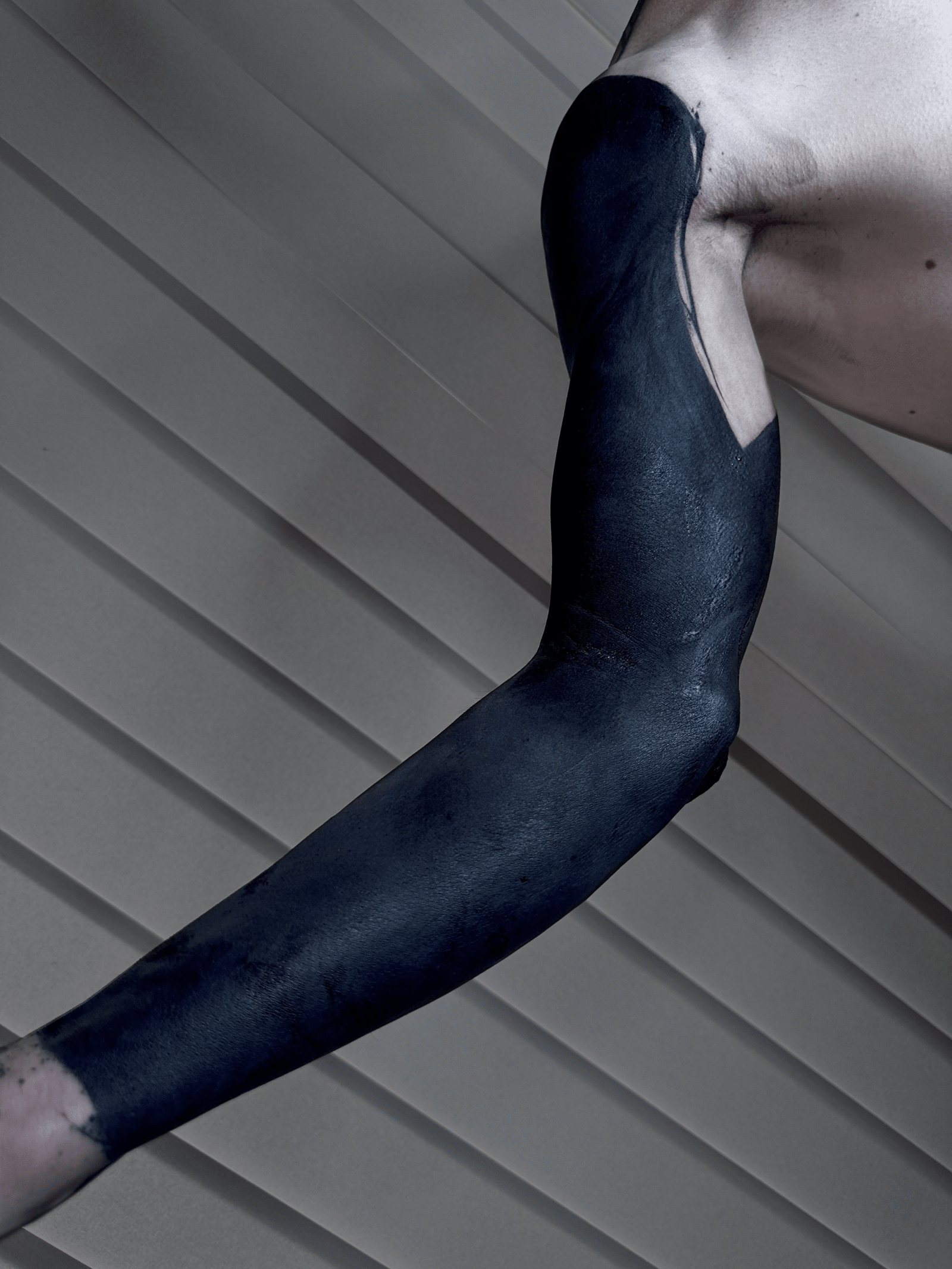
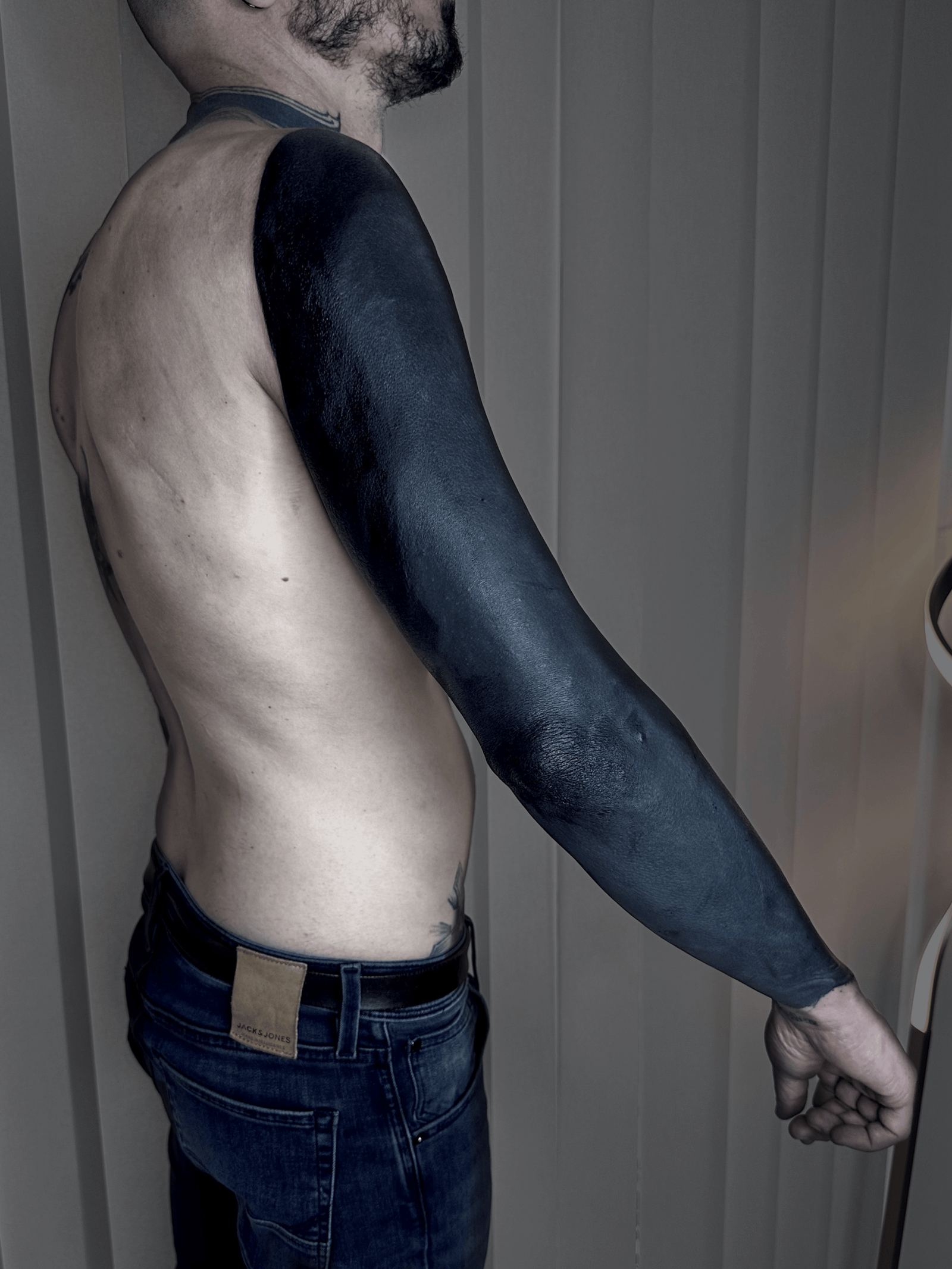
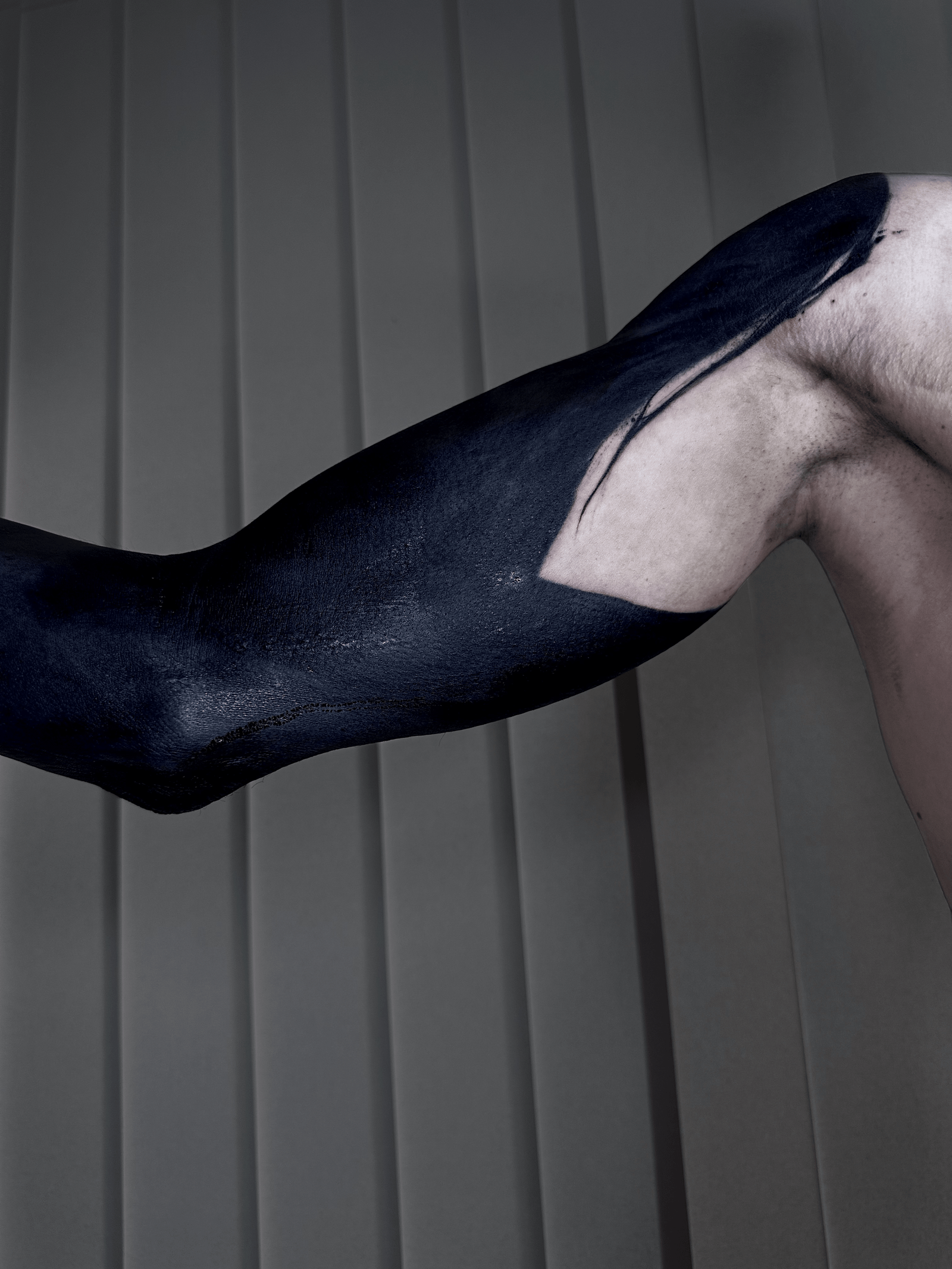
A blackout involves applying black ink to large areas of skin, creating areas of total coverage where the original design—if there is one—becomes completely illegible.
Unlike a traditional cover-up, which uses visual elements to divert attention and break up the old tattoo, a blackout works by visual obliteration. There is no composition designed to trick the eye—the surface is completely replaced by a uniform field of black.
It is the most radical and definitive solution for those seeking to completely erase an unwanted past from their skin.
Technical Aspects of Blackout Tattooing
Saturation and Uniformity. The biggest challenge in blackout tattooing isn’t darkening the skin—it’s ensuring that the black ink is applied uniformly and consistently across the entire area. Any lack of saturation results in uneven patches that compromise the final result. This requires specific needles, a controlled application technique, and, often, multiple sessions.
Healing and Regeneration. Large areas of black ink require a longer and more demanding healing process. The skin needs time to absorb and settle the ink, and the final result can only be assessed after weeks or months. The tattoo artist must prepare the client for this timeline and provide specific aftercare instructions.
Future modifications. A well-executed blackout allows, if the client wishes, for white tattoos or tattoos with light pigments to be applied over the black—a technique known as white-on-black or gray scaling. This possibility adds an extra layer of planning to the project.