

THE BODY AS A SUPPORT
A tattoo is applied to a living organism that is constantly in motion, with curved surfaces, varied textures, and specific physiological behaviors. Forget all that “body as canvas” nonsense and all the misunderstood clichés. The concept is simple: understanding the body’s anatomy isn’t just a nice-to-have for a tattoo artist—it’s a fundamental requirement.
Anatomical Factors That Influence Tattooing
Skin thickness and dermal layers. Human skin varies in thickness depending on the body region. Areas such as the forearm and calf have thicker dermal layers, allowing for greater ink retention and safer application. Areas such as the hands, feet, ribs, and scalp have thinner skin, where needle depth must be strictly controlled to prevent blowouts (ink spreading) or improper healing.
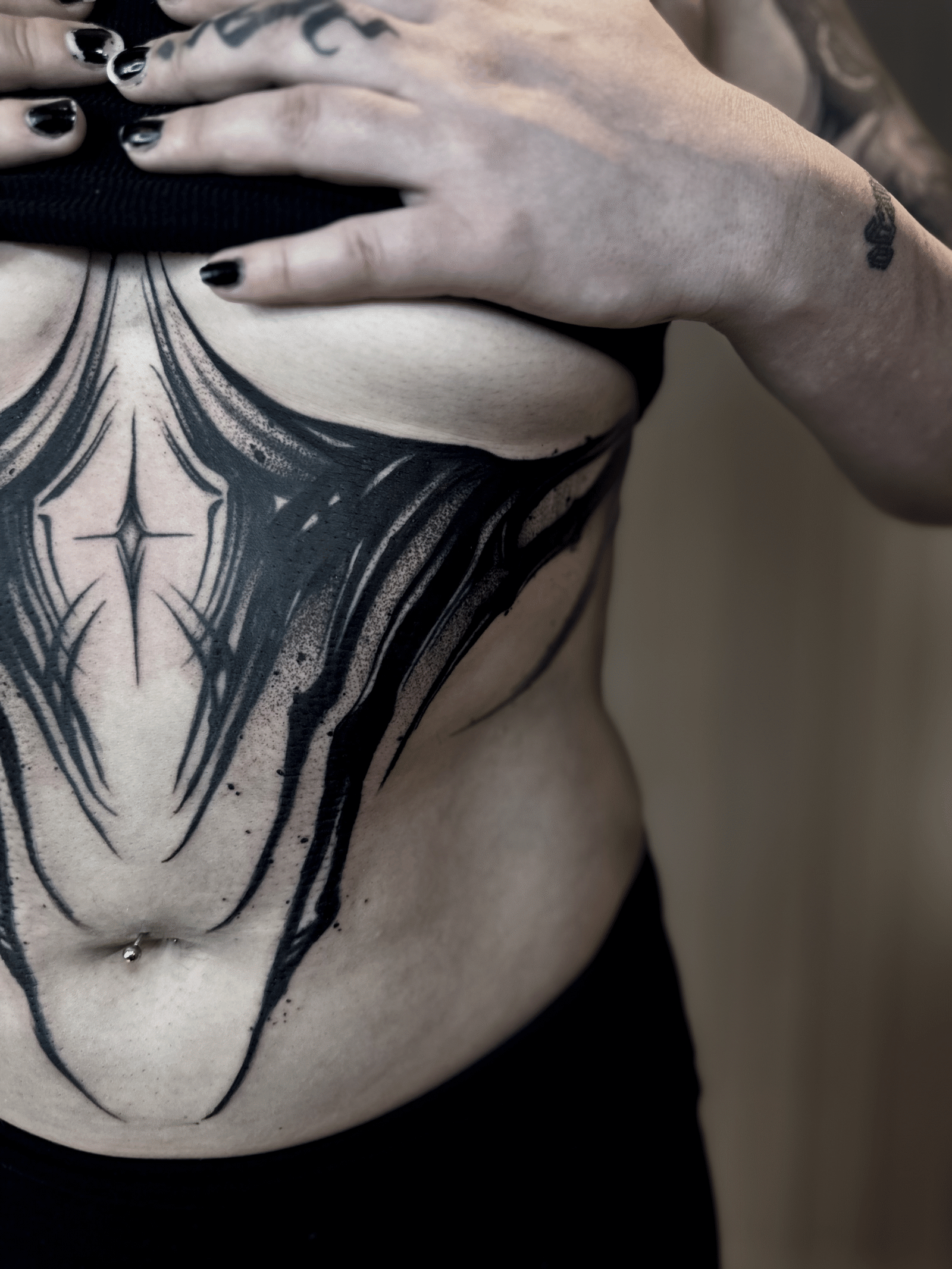
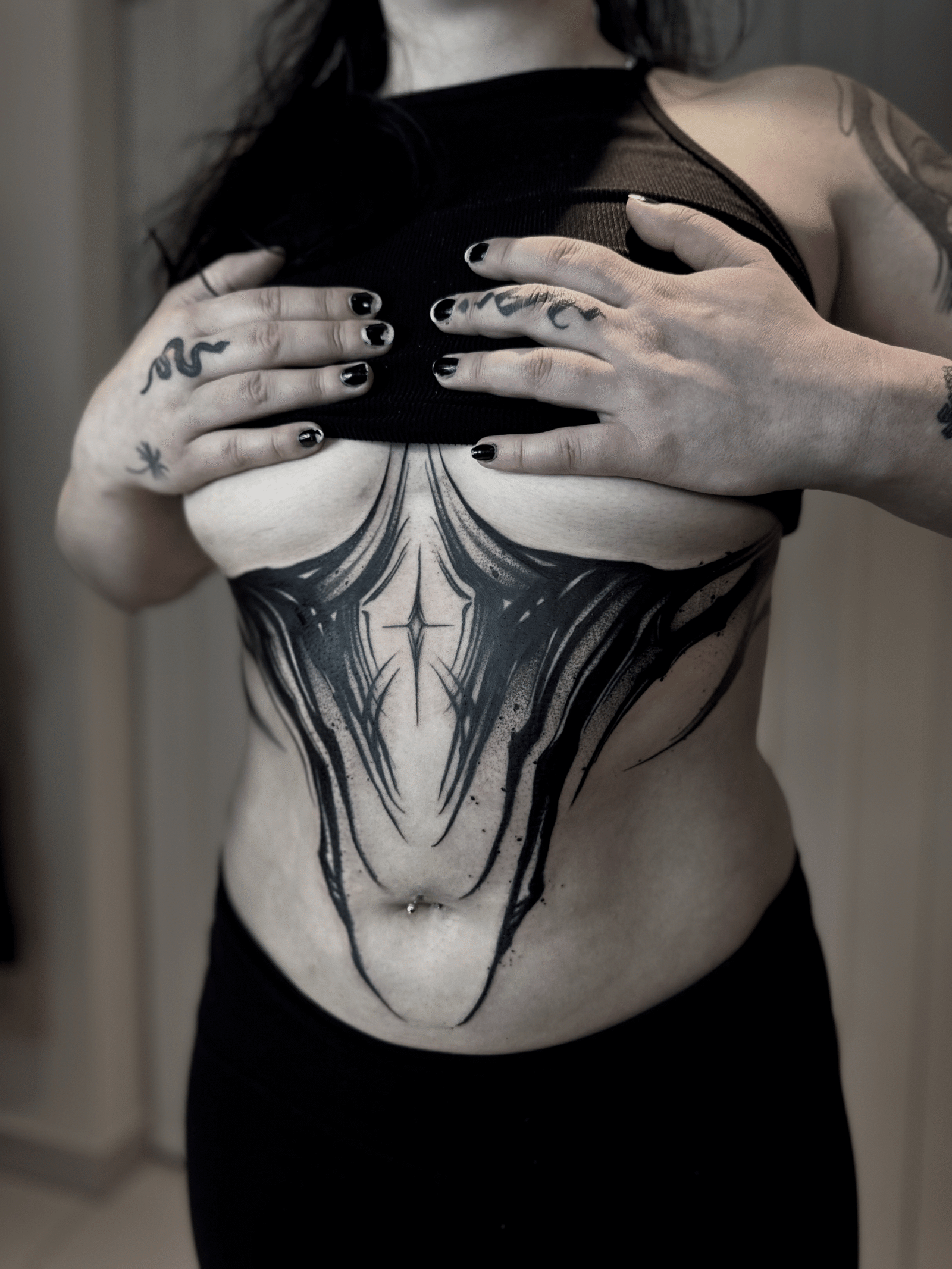
Skin elasticity and tension. Skin exhibits varying degrees of elasticity. Areas such as the abdomen, inner arms, and areas near joints experience greater mechanical stress during movement. Tattoos in these areas must account for skin deformation so that the design does not become distorted over time or during certain postures.
Scale and proportion. Very small designs applied to areas of more elastic skin tend to lose legibility over time, as the ink naturally spreads into the dermis. Proper sizing is a technical decision based on the application site.
Design orientation. The direction of the lines should follow the flow of the muscles and the body’s natural curves. Tattoos that follow the body’s anatomy tend to age better and appear more integrated into the body’s structure than those that work against it.
Placement. The choice of location is not just aesthetic—it’s functional. Areas subject to constant friction (such as the waist, feet, and hands) require extra care during healing and tend to need more frequent touch-ups.
Tattooing without considering anatomy is like designing for a surface that doesn’t exist. The body is three-dimensional, dynamic, and unique to each individual. A technically competent piece is one that not only features a good design but also takes into account how the skin behaves, how the body moves, and how the tattoo will age.
The tattoo artist who has mastered applied anatomy does not tattoo on the body—they tattoo with the body.